Saturday, November 13, 2010

Frontal Lobe Aneurysm

Field days

If anything they have field days is that neither is same as above. There are days that are very good that Most people reflect on blogs but among them there are many days that attract less attention, but can be very special if we value them. Not everything will be to see how large carnivores feed on large prey or as a run a game set. These days you do not usually arise when you have a conversation with a colleague from the scene because at the time do not seem peculiar but remember last time reviewing photographs and make it a day not got your attention, do a couple of weeks later.

Fox (Vulpes vulpes )

Something happened late October when giving one of the routine trips looking for something interesting I came across a fox champion. Summer has been a pretty weak in terms of observations of this dog and wanted to return to photograph it as it deserved. You see, one of the most abundant mammals in our country and yet his comments sparked a motivation comparable to that of any species with more popularity. The fox in question already has a winter coat and a beautiful white club crowned his bushy tail. The fox is one of those animals is always there and often is not given the attention it deserves.


This animal stands out from all over the world for his cunning, starring in numerous fables and stories. And the truth is that watching carefully you realize that your reputation is deserved. Considered vermin by many, due to attacks on poultry among other things, this animal has been attacked by the man continually and in fact continues sufirendo. In many small game farms in the southern half of the Iberian peninsula was still peppering the fox so that "we are not quite" game. Things like that are rather funny since that takes the fox hunt the hunter. The need to survive first and the second not. Anyway, back to business as usual, money and other stories. As you can see, the observation of an animal in its environment a reflection bounces to another and you really question it because mowing down a bug like this.

Cantabrian Chamois (Rupicapra pyrenaica parva )

Another animal abundance in the highlands of the Andes is the chamois. An animal whose zeal is a sight to admire and say that is about to begin. They are the wild cattle of the range, fully adapted to life among the rocks and limestone vertical cut. Pure fiber prepared to cushion the falls among the rocks at breakneck speeds. One can see many chamois over your life as an animal is quite abundant, but when you really stop to think about what these animals are able to observe them in much greater detail and assesses the "machine" that is in front. A simple observation of chamois can be special when you try to see why this animal is like and what makes it special.

are times when many birds visiting from northern Europe to spend the winter in a warmer environment and greater availability of food that the land they came from, that at this time appears to be covered with snow. That makes a field trip worth watching only one of these animals and the fact that a year to check the nature continues as usual despite the obstacles and that these birds return to travel hundreds of miles. This is the case of Fieldfare and Redwing, thrushes that come from lands like Finland and Norway to feed in our fields. Often form mixed flocks of Fieldfare, Redwing, Common, some chat from time to time and also some blackbird capiblanco at the peak of the migration of this species. This year already saw a few copies of Fieldfare and Redwing feeding on the fruits of hawthorn and include leave capiblanco see a blackbird always a joy.

Fieldfare (Turdus pilaris )

Redwing (Turdus iliacus ) photographed on a vineyard in 2007 with my previous camera, Lumix migrates

Another winter I met this year was the real finch. Finch did not see a real since the winter of 2007-2008 and the truth is it is a most handsome bird we see in this time of comings and goings. Usually they appear in flocks of finches and chaffinches, goldfinches and greenfinches. Ls males have a dark blue tint to the head that is the remains of their breeding plumage while the females tend to be more discreet. It was a very good season for overwintering in general and I saw the biggest bands of Lugano in the Cantabrian mountain birch and eating in the "Humeiros" (Alder) of the banks.

Brambling (Fringilla montifringilla) photographed in 2007 along with chaffinches

Brambling photographed this year

The truth is that to meet a good flock of finches and other birds is very entertaining as where you least expect may appear one of these species you want to see every winter. This past weekend saw a total of 10 bramblings approximately in 2 large flocks. One of these sides had finches, real, finches and sparrows (often these species feed on lawns and people in their break) and the second side had chaffinches, real, greenfinches, yellowhammer and sparrows.
The migration is one of the reasons why it is worthwhile to take the field in these days of storms and cold. However, some field days or you have no chance to see the residents, or migrants, or anything ... Sure you've all experienced one day where it seems that the mountain is silent and does not move any animal. There are days when you have to find something that proves that all you do is really worthwhile. This is when the day gives you a beautiful sunset, or a color in the leaves of the beech reflects the rainfall.

has Sheets ( Fagus sylvatica) in autumn

Autumn Sunset

are small details, is that in this hobby, as in life, small details that really make people happy and that if learn to appreciate you always have one and make it worthwhile. Those who engage in too much, never was satisfied and not get made. Okay to be ambitious but in perspective, and is very easy to jump the line. I hope you have enjoyed and identified themselves with ye these days of field that they are still a few notes in a notebook for someone normal but as I reread them over time become special memories. A greeting

Saturday, October 30, 2010

Metal Parents Are The Best

shorebirds in Asturias

Hello everyone. This input was in the room since September, when it David Alvarez, excellent biologist and a better person, decided to join in the corners of affection for the species of shorebirds that rely on the Asturian coast in the autumn passage. He does not like to be thanked for teaching the fact bugs, so I appreciate the company and the sharing of experiences throughout the day.
Spaniard started visiting a sandy looking for a confident sandpipers foraging on algae left by the tide, however first thing we did not have much luck. Some ringed plover, turnstone and a little more running around among the coastal rocks and pebbles. We were then taken to
Llastres, village famous for the series "Dr. Matthew" since it contains some of the scenarios, but also has a great interest in bird watching in your port as we can find some marine lies behind the intense vaje the north. Was the case of 4 auk who let go with the flow while we watched with binoculars. One line had a peak looming. Moved away from the beach and then turn around and 3 of them enter the port town where we portray.

Youth alkaline ( Alca torda ) in Llastres

It was just 2 months he has been in the breeding colonies of these animals in Scotland and meet them in these latitudes makes clear the ability to move and survival of some animals and a year after years are able to travel hundreds of miles to give rise to a new generation that somehow keep their genes when they are no longer here.
A young common tern also was busy fishing in the shallow end of the beach as a young cormorant to dive well we could see and appreciate how it moves under water thanks to the shallow layer became water in a glass virtually transparent.

Common Tern (Sterna hirundo )

is amazing how some species are more or less confident as to where we find them. For example, the needles were generally confident all day, but where were was more confident on the beach of Gijón. It's funny how people look at us still enjoy the sun at this time of year, as we approached with our objectives and outerwear to the waders. Several people told us that if we photographed the gull chicks, and it seems that many people have this belief that small waders are gull chicks. They say that the pot is best and give a unique flavor. You know, traditions. Celebrities are
turnstone and egrets of San Lorenzo in Gijón, for your confidence and variety of poses and capture the moments that allow to operate with complete ease and confidence with the people they are accustomed.

Turnstone (Arenaria interpres )

Egret (Egretta garzetta )

ringed plover (Charadrius hiaticula )


colipinta Needle ( Limosa lapponica )

month of September with the migratory movements of many species is a month used by many ornithologists to search for rarities. I personally am of the opinion that we must first know our wildlife, that really has an ecological importance of weight and there will be time for rarities, but the truth is always struck by the observation of animals that may not and never come back to see rarely displayed by our latitudes, hence the weirdness. At that time one side of 8 write Lapps fed in the area of \u200b\u200bCabu penises, one of the windiest points on the Iberian Peninsula and devoid in some practical points of vegetation and that does not support the intense sweep of the wind. We struggled to find them but finally found the 8 animals feeding on the body completely glued to the ground and with movements that resemble those of rodents. To admire the animals a few feet is something not easily forgotten and once again demonstrates the confidence of certain animals as they come from.


Write Lapps ( Calcarius lapponicus ) on the central coast Asturiana

I commented to David that it seems incredible that a little more than a century guillemots and other criasen marinas in the area cut off from the Peñas and today is not any of that practically the entire coast of Cantabria.
The cliffs are monitored, as all settings for a predator and in this case a peregrine falcon delighted us with some last a good distance to show their presence.

peregrine falcon (Falco peregrinus brookei )

decided to finish the day at the beach Bañugues, famous for the abundance of shorebirds in the steps and the ease of portraying them if you do it the right way and patience. There were many species that we saw on this beach.
begin with the sandpiper. The most abundant and restless of the waders that were there. They feed in the area where he still gets a bit of tide water. Advantage algae tides leave to seek food and are quite large groups that may include several species. We could see dunlin, sandpipers toed, often sandpiper, sandpiper fat (this is fed in a group of needles instead of the other correlations) and finally another rarity, the Buff-breasted Sandpiper. A name that comes to hair and its plumage is this color. They also highlight its yellow legs and one eye slightly torn in the American species of shorebirds.

Sandpiper often (Calidris minuta )


toed Sandpiper (Calidris alba )


Dunlin (Calidris alpina )

Sandpiper fat ( Calidris canutus )


Buff-breasted Sandpiper (Buff-breasted Sandpiper )

This species of sandpipers does not like water and when it appears it is usually in meadows and areas of the rasa but it is rare to see it directly on the beach when it reaches latitudes are not very normal for you. The truth is that animal is a very striking and grateful to see. We are also
redshanks, needles and plovers on the beach. The needles appear in the area where the sand is softened by the arrival of the waves and bury their beaks designed to catch invertebrates hypogea.

Common Redshank (Tringa totanus )

colipinta Needle (Limosa lapponica )

The surprise of the day we gave it a kingfisher which landed on the rocks on the beach for Bañugues make a haul of fish in the tidal pools before our eyes. You can read more about it here

Kingfisher (Alcedo atthis )

In short, a day which costs the same and mostly forgotten. With a variety of species, environments, times, and above all a company scrotumtightening. I hope you liked the entry. A greeting

Sunday, October 24, 2010

Watch Vidz Masterbate

The clock on the nature

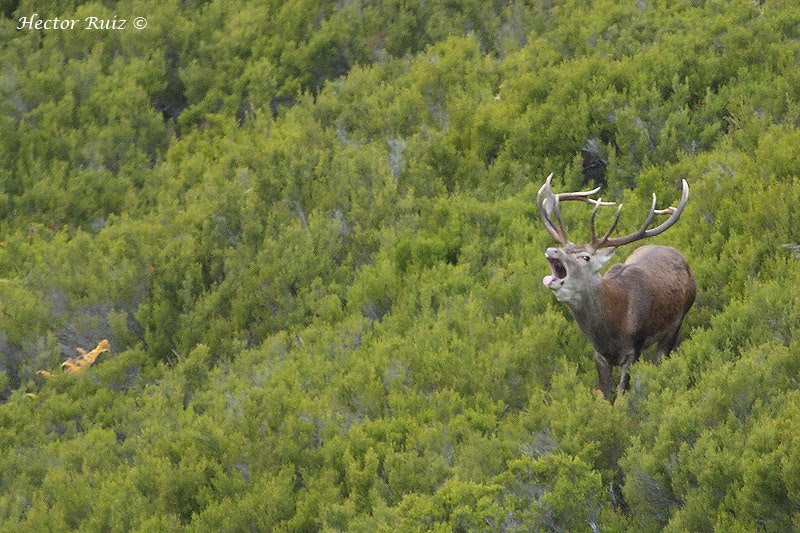
I'll make a stop in entries over Scotland to dedicate this entry to areas dens, as ultimately is the goal of the blog. The human being has always been committed to quote it all, in measure, in order to express it in numbers ... I guess that pretend that everything is in order, makes us to relax. No But the clock of nature depends on many factors such as rainfall, climate, etc ... To give an example, the deer rutting always the case in late September and early October, but we can not say that day begins, because if the rains have been delayed a little bit more or if there is intermittent rainfall in early September the deer are "jealous" before. Everyone knows that the Fall officially begins September 23 at dawn, but according to the timing and nature watch the fall begins with the roars of male deer in the Cantabrian mountain.

The rut is a natural ritual that I have attended since I have memory. Had 6 years when he kicked the beech with "fleitas" hitting me in the chest and getting wet with morning dew. It is an event that has had a tourism boom in the last decade. I remember when we were in rut and we were not with anyone. Once a guard accompanied by hunters but little else. However, the explosion of "ecological consciousness" (in quotes because there is a real conscience, I wish I was) and assistance from ecologists increasingly asphalt to the mountains makes the rut and do not convey that sense of contact between yourself and the nature that was a few years ago.

male deer (Cervus elaphus ) screaming in the Cantabrian Mountains (click to enlarge)

This year I attended less than normal in the rut and yet it was the best year I have enjoyed and observed the typical rituals of behavior. In the rutting male deer are usually creating a harem females, females with calves and others. This harem they defend from other males and females mate with it. This year could see yet another lesser-known protocols. In the same number of males have been displayed in an area where a couple of females in heat. That is when these males are about the female, watercress and fight to win permission from the female and reproduce.

Deer Enceladus in the Cantabrian

is a period of great stress and physical exhaustion for males of this species and which often do not have time to eat as they should, having to remain constantly vigilant both to prevent other approaching males, to prevent them from leaving the females. When a female tries to get away from the male that the saves so that the female is forced to turn around and return to the harem.
When two males are too close to a female nearby, usually ends in a collision in which the males lower their heads and horns intertwine to produce a dry sound like the breaking of firewood in the forest. Usually be Small, but can sometimes take several minutes. Do not usually cause serious damage but no deaths in which a deer drives a luchadera in the opponent's body or head killing him. More standard injuries are cuts and a broken tip of the horns.

Deer Fight in the Cantabrian Mountains

not always get to the fight. What I usually do is pitch in male fern and scrub to show their strength when starting fragments thereof. Also have an important effect bawling, of course. But not only influences the intensity of the squall, but the timing, tone, high or low it is .. are a combination of factors makes females opt for one or the other males. Tenran must note that as you will make your belly and nutrition for babies during pregnancy and breastfeeding have to find a male qualities to offset that cost, to ensure in any way the success of the offspring.

Deer watercress in the atmosphere of the Cantabrian
Piornal
Though not always a priori males are the ones who seem to have more offspring end up that way. There opportunistic males with less strength and qualities expected in the broom to spend some clueless female of the harem to copulate with her.
Most Photo of rutting are made of Mediterranean mountain areas as Cabañeros, high Tajo and similar places. However watch this show in the Cordillera with the feeling that at any moment you can see a bear or a wolf that has a special magic.

The rut

A curiosity is that I have heard deer watercress in July, an Asturian mountains. Therefore, the deer do not use this method exclusively for the zeal but may serve for something else.

Dispute between males and females

And when the rut takes its last legs when the yellow color palette and starts painting red the Cantabrian mountains leaving shocking images to our retina. In fact in most cases is not that new pigments in the leaves, but the green pigment (chlorophyll) degrade exposing the yellow and orange pigments (carotenoids) that call so much attention.

Beech in autumn

Detail beech leaves in a Cantabrian

salamanders also with their black and yellow leaves adorn the floors of the northern forests, bringing its touch of color to the spectacle of autumn .

Samandra (Salamandra bernardezii salamander)

So we see that despite our calendars marked time in a way that we are more or less useful, nature takes its pace without guided by established rules and based only on itself. I hope you enjoyed the entry and greeting. Well